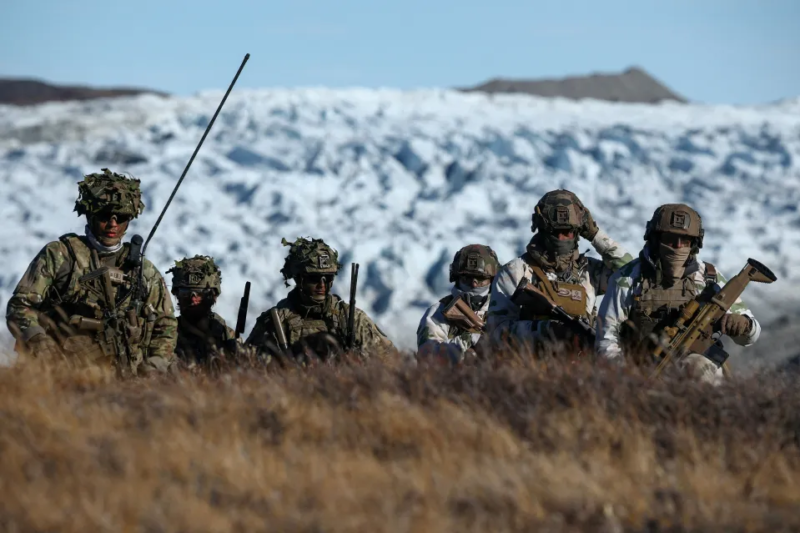
Denmark’s long-standing “shoot immediately” military directive for the defense of Greenland has resurfaced in public discourse amid renewed global interest in the Arctic. Often misunderstood as an aggressive posture, the rule is in fact a Cold War–era military protocol rooted in sovereignty, deterrence, and alliance politics.
To understand why this directive still matters today, it is essential to examine its historical origins, Greenland’s strategic value, and the broader NATO Article 5 implications that continue to shape Arctic security calculations.
The Genesis of the 1952 Directive: Why Denmark Adopted “Shoot First”
The so-called “shoot immediately” rule dates back to 1952, during the early Cold War era, when Denmark reassessed its defensive posture following the Nazi invasion of 1940.
Denmark’s occupation during World War II exposed a critical vulnerability: hesitation and unclear rules of engagement could result in rapid loss of territory. When Greenland’s strategic value increased after the war—particularly as aviation, radar, and missile technologies evolved—Danish defense planners adopted a doctrine of immediate armed response to any unauthorized military incursion.
The directive was designed to:
- Prevent ambiguity during a surprise attack
- Eliminate delays caused by political authorization chains
- Signal absolute sovereignty over Greenlandic territory
Rather than escalation, the rule functions as a deterrence mechanism, ensuring that any hostile action would be met with instant resistance.
Greenland’s Geopolitical Chessboard: Strategic Importance Beyond the Headlines
Greenland’s importance extends far beyond its size or population. As an autonomous territory within the Kingdom of Denmark, it occupies one of the most strategically significant locations on the planet.
Key Strategic Factors
- Arctic security: Greenland sits at the gateway between North America and Europe
- GIUK Gap: Control of the Greenland–Iceland–UK corridor is vital for monitoring naval and air movement
- Rare earth minerals: Greenland holds significant untapped reserves critical for modern defense and technology
- Missile and radar positioning: Its geography is essential for early-warning systems
As polar ice recedes, new shipping routes and resource access have intensified competition among global powers, making Greenland a focal point of modern geopolitical strategy.
NATO’s Stance: Article 5 and the Collective Defense of Danish Territory
Greenland is unequivocally covered under NATO Article 5, which states that an attack on one member is considered an attack on all.
Danish leadership has repeatedly emphasized that:
- Greenland is Danish territory under international law
- Any military aggression would trigger collective defense obligations
- The “shoot immediately” rule aligns with NATO deterrence principles
Former and current Danish officials, including Prime Minister Mette Frederiksen, have stressed that Arctic defense is not a bilateral issue but a cornerstone of transatlantic security.
This stance ensures clarity for allies and adversaries alike—there is no ambiguity regarding Greenland’s defensive status.
Danish and Greenlandic Rejection: “Greenland Is Not For Sale”
Both Denmark and Greenland have consistently rejected any notion of foreign acquisition or control.
This position gained global attention following statements made during the Donald Trump administration suggesting the purchase of Greenland. The response from Copenhagen and Nuuk was unequivocal.
Key points of rejection include:
- Greenland’s right to self-determination
- Denmark’s responsibility for defense and foreign policy
- Respect for sovereignty under international law
Greenland’s government has repeatedly emphasized that while it seeks economic development and partnerships, sovereignty is non-negotiable.
Recent Developments and Diplomatic Fallout
In recent years, Arctic policy has become more prominent within NATO and European defense ministries. Increased military exercises, diplomatic engagements, and policy statements reflect heightened awareness of Arctic vulnerabilities.
European allies have largely supported Denmark’s position, viewing Greenland as a stabilizing anchor in the High North rather than a negotiable asset. Coverage by outlets such as Berlingske and official statements from the defence ministry reinforce the message that Greenland’s status is settled.
The renewed attention has also accelerated discussions around infrastructure investment, surveillance capabilities, and alliance coordination in the Arctic.
Frequently Asked Questions (FAQs)
What is Denmark’s “shoot immediately” rule and when was it established?
It is a military directive established in 1952 allowing immediate armed response to unauthorized incursions into Greenland, designed to deter surprise attacks.
Why is Greenland considered strategically important in current geopolitics?
Its Arctic location, control of the GIUK Gap, access to rare earth minerals, and role in missile and radar defense make it geopolitically critical.
How would an attack on Greenland impact NATO’s collective defense obligations?
An attack would trigger NATO Article 5, requiring collective military response from alliance members.
Has the United States ever attempted to acquire Greenland before?
Yes. The U.S. explored acquisition possibilities in the 20th century and again raised the idea publicly during the Trump administration, though all attempts were rejected.
What is the current stance of Denmark and Greenland regarding foreign acquisition?
Both Denmark and Greenland firmly reject any sale or transfer of sovereignty, emphasizing self-rule and international law.